
Bilal Orfali
Sheikh Zayed Professor for Arabic and Islamic Studies at the American University of Beirut
Through investigations of manuscripts, this book explores important aspects of the life of Badîʿ al-Zamân al-Hamadhânî’s Maqâmât. The broad concerns of the book are divided into three sections: authorship, texts, and contexts. Each chapter in this volume investigates hitherto unstudied textual materials related to al-Hamadhânî’s Maqâmât that adds to our understanding of the text, its history, and the literary culture that created it.



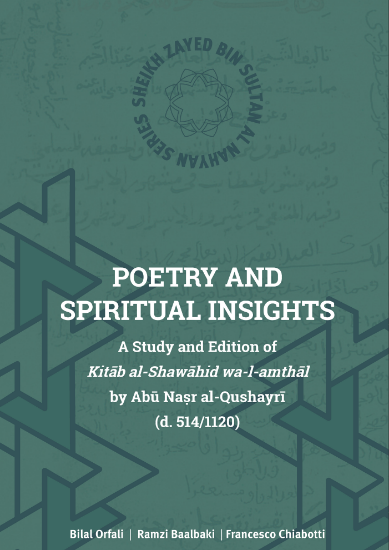
Kitāb al-Shawāhid wa-l-amthāl by Abū Naṣr al-Qushayrī is a foundational Sufi work that integrates poetry and prose to transmit spiritual teachings, illuminate early Sufi pedagogy, and attest to the enduring intellectual and mystical legacy of the Qushayrī family within Islamic literature.
AUB Students Take on Leadership Roles at Arabian Days Festival in Abu Dhabi
The American University of Beirut (AUB) announced that ten of its students participated in the prestigious Arabian Days Festival in Abu Dhabi, marking a strong presence at one of the region's foremost celebrations of Arabic language and culture. The students' involvement underscores AUB's commitment to cultural engagement and highlights the significance of this international festival. Arabian Days Festival: A Celebration of Arabic Language and Culture Now in its third edition, the Arabian Days Festival is a three-day cultural event organized by the Abu Dhabi Center for Arabic Language and hosted at Manarat Al Saadiyat in Abu Dhabi. Timed to coincide with UNESCO's World Arabic Language Day on December 18, the festival has become an annual celebration of Arabic as an integral part of identity, heritage, and creativity. The 2025 program featured an array of high-profile panel discussions, art exhibitions, live concerts, traditional bonfire storytelling sessions, and other vibrant cultural activities that reimagined the role of the Arabic language in contemporary society..
AUB Students Shine at Abu Dhabi’s Arabic Creative Industries Congress
Six graduate students from the American University of Beirut (AUB), all affiliated with AUB's Sheikh Zayed Bin Sultan Al-Nahyan Chair for Arabic and Islamic Studies, took part in the Congress of Arabic and Creative Industries (Congress ACI) held at Etihad Arena in Abu Dhabi. The students, pursuing master's and doctoral degrees, were invited by the Abu Dhabi Arabic Language Centre (ALC) to attend panel discussions and hands-on workshops at the two-day congress, which convened leading Arab and international creatives and experts to explore the future of Arabic in the creative industries. The congress, themed “Arabic Creativity Reimagined: Innovation in Storytelling and Audience Engagement," served as a major platform for forward-looking conversations on Arabic content in media, technology, literature, and the arts. Organized by the ALC, the event has become a leading international forum dedicated to championing the Arabic language and its cultural expressions in creative fields. Now in its fourth year, the annual gathering showcases Arabic creativity to global audiences and helps build a thriving ecosystem for Arab cultural and creative industries. The Sheikh Zayed Bin Sultan Al-Nahyan Chair for Arabic and Islamic Studies at AUB facilitated the students' participation as part of its mission to support young scholars. The endowed chair provides master's and doctoral scholarships in Arabic and Islamic studies and sponsors conferences, public lectures, workshops, and research forums to promote scholarship in the field. “We are proud to see our students engaging in such a high-level international forum," said Professor Bilal Orfali, the Sheikh Zayed Chair for Arabic and Islamic Studies at AUB. “This congress offered them a life-changing opportunity to witness how Arabic is a living language—one that is actively shaping and being shaped by various modern industries. Such experiences enrich their academic journey and inspire them to contribute to the future of Arabic language and culture." The six AUB students found the experience deeply enriching, both academically and culturally. They participated in specialized panels and workshops on topics ranging from Arabic storytelling and digital publishing to the role of artificial intelligence in Arabic content creation. Beyond the conference halls, they joined a cultural program with visits to museums and heritage sites in Abu Dhabi, gaining a deeper appreciation of the UAE's cultural landscape. “I am deeply grateful for the enriching experience I've had at this congress, and for the joy it brought me. It was a true pleasure meeting creative minds from across the Arab world, each adding their own spark to this gathering," said Malek Chaker, a PhD student, reflecting on the opportunity. “As a member of the Sheikh Zayed Chair for Arabic and Islamic Studies research team, attending the Arabic Congress in Abu Dhabi last September was a meaningful opportunity to engage with scholars and contribute to the advancement of Arabic and Islamic thought," noted Aida Abbas, another participant. Rana Roukoz, a master's student, highlighted how the congress expanded her vision of Arabic's evolving role: “Our trip to Abu Dhabi was truly amazing. We felt valued, welcomed, and given real space to grow as youth with a future that Abu Dhabi is genuinely committed to nurturing. The panels were insightful, and the workshops offered valuable perspectives on the Arabic language—its future, new ways of teaching it, and its role in AI. The ACI Congress was an eye-opening reminder of how vast the potential of Arabic truly is, and how essential it is to keep investing in it rather than letting it fade in the face of other foreign languages. It also reminded us to embrace our culture, nurture it, and grow with it through AI—working with technology, not against it." As a further testament to their experience, the AUB students each received a certificate of participation from the congress organizers and have been invited to two major upcoming events. They will take part in the Emirates Airline Festival of Literature in Dubai in January 2026, one of the region's premier literary gatherings. They were also invited to the “Arabian Days" festival in Abu Dhabi in December 2025, a cultural celebration coinciding with World Arabic Language Day that highlights the Arabic language through poetry, arts, and intellectual discussions. These opportunities will allow the students to continue engaging with the broader Arabic literary and cultural community. Their participation in such high-profile events underscores AUB's commitment to nurturing the next generation of Arabic scholars and creatives and highlights the vibrant and growing role of the Arabic language on the global stage..
AUB Press Publishes Tuḥfat al-Mulūk in Landmark Contribution to Arab and Islamic Heritage
The American University of Beirut (AUB) Press announced the latest release under its Sheikh Zayed bin Sultan Al-Nahyan Series for Arabic and Islamic Texts: Tuḥfat al-Mulūk fī al-Taʿbīr by Abū Aḥmad Khalaf bin Aḥmad al-Sijistānī (d. 399/1009). This publication aligns with the Press's enduring mission to revive and promote Arab and Islamic heritage through critical editions and rigorous academic scholarship. Tuḥfat al-Mulūk is among the earliest known Arabic works on dream interpretation, attributed to the Emir of Sistan, Abū Aḥmad Khalaf bin Aḥmad, known as Khalaf al-Ṣaffār. Published here for the first time, the text makes a significant contribution to the Arab and Islamic intellectual tradition, filling a long-standing gap in the publication of heritage texts that explore the deep interconnections between culture, knowledge, and politics. What sets this work apart is its authorship by a political ruler rather than a religious scholar or jurist. This unique perspective merges the worldview of the ruling elite with reflections drawn from everyday society, offering a compelling and nuanced portrait of mental, cultural, and social life in the fourth-century AH / tenth-century AD. Far beyond a mere compendium of dream symbols, the text serves as a dynamic historical document that captures a broad spectrum of social experience by highlighting the roles and perceptions of various societal groups, including artisans, professionals, women, children, slaves, and religious or ethnic minorities. In addition to its intellectual and social value, Tuḥfat al-Mulūk provides rich insights into the material culture of the Islamic world at the time. The text includes detailed descriptions of architecture, furnishings, weaponry, fashion, jewelry, and everyday tools, offering an authentic glimpse into daily life and material practices. This fusion of symbolic dream language with vivid depictions of tangible reality renders the work a rare and complex source of historical and cultural meaning. This critical edition and introductory study were prepared by Dr. Lina Jammal, a specialist in early Arabic literature, who earned her PhD from the American University of Beirut in 2021. Dr. Jammal has authored several peer-reviewed studies and has translated significant academic works into Arabic. The book also benefited from the expertise of the co-editor, Dr. Bilal Orfali, Sheikh Zayed Chair of Arabic and Islamic Studies at AUB, who received his PhD from Yale University in 2009 and has an extensive publication record in both Arabic and English..